Targeting
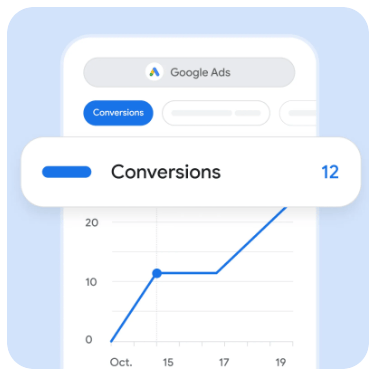
Small businesses were converting on promotional offers but dropping off after initial onboarding
Kristina Ortega
Creative Director, UX

RoleSenior UX Designerpromoted to UX Director
Company
R/GA, Gteam Year2023-2024
At R/GA I led the global redesign of ads.google.com, transforming it into a modular, scalable marketing platform designed to better serve mid-to-large marketing organizations. The project focused on aligning site messaging with the audiences driving the majority of revenue, while enabling faster global deployment and iteration.
Market research revealed a critical misalignment between the site’s messaging and its most valuable audience. While the experience was optimized for small businesses, the majority of Google Ads revenue came from mid-to-large organizations with complex decision-making structures.
Small businesses were converting on promotional offers but dropping off after initial onboarding
Sales and support channels were being misused as onboarding resources
Enterprise and mid-market teams lacked the content needed to build internal business cases for adoption
I led a comprehensive discovery and design process that included stakeholder interviews across product, marketing, and sales, A large-scale competitive and ecosystem audit, information architecture review and restructuring and development of experience principles and user journeys. From this foundation, I developed multiple site architecture hypotheses and validated them through rapid user testing, including card sorting and tree testing conducted over a two-week period.

I used card sorting and tree testing to validate three site architecture hypotheses, running rapid sessions over two weeks to identify the structure that best supported user navigation and content discoverability.
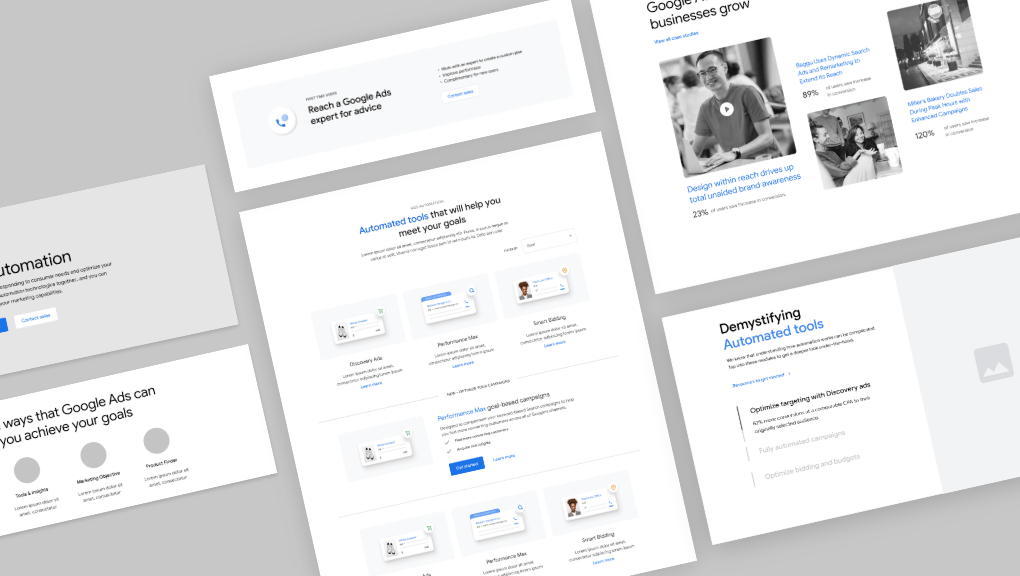
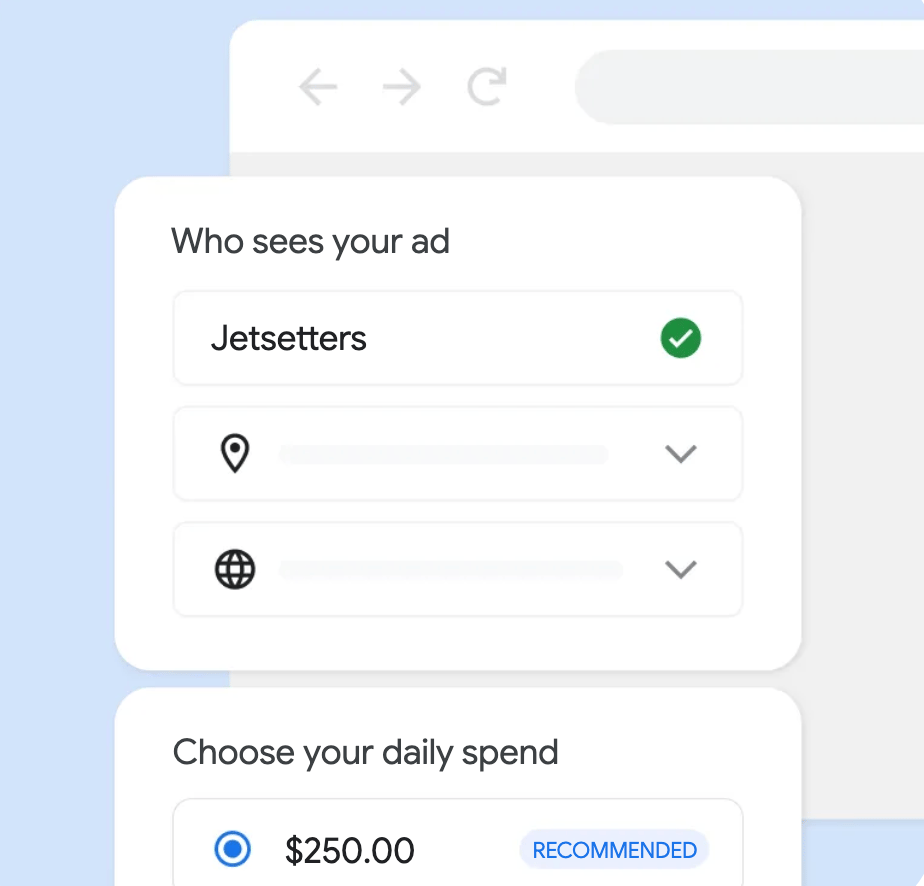
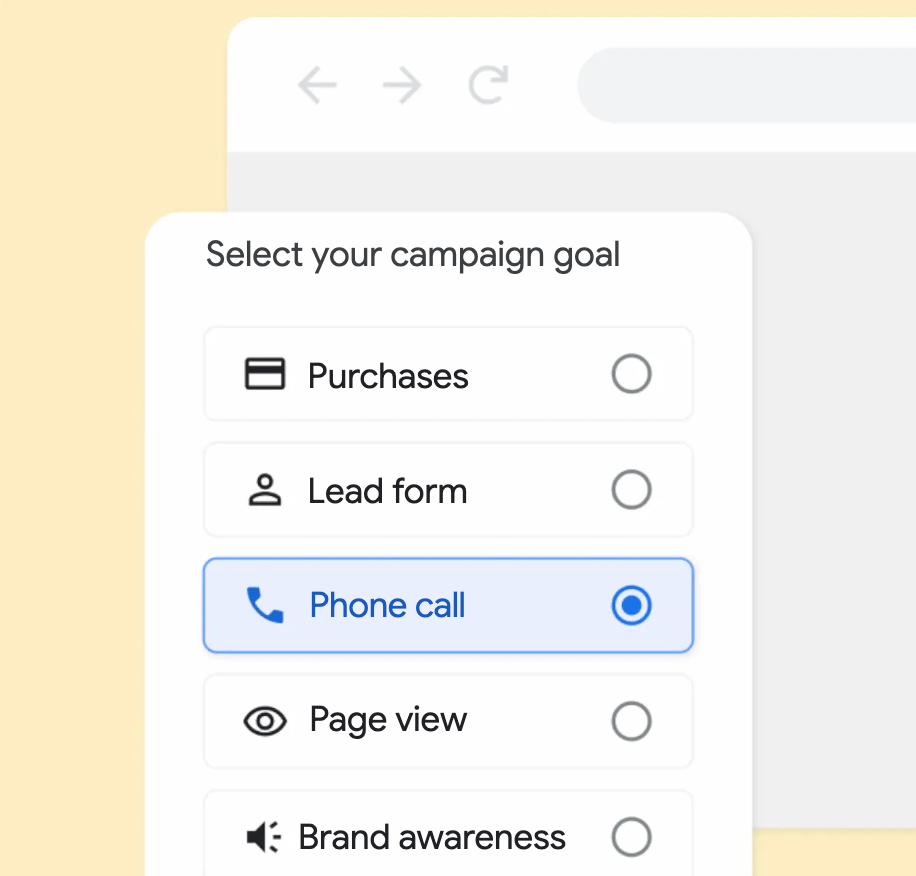
I redesigned the site hierarchy around the priorities of mid-to-large marketing organizations, shifting from generic SMB messaging to intent-driven pathways. This increased page relevance and reduced drop-off by keeping users engaged within the conversion funnel.
I produced high-fidelity wireframes on a weekly cadence, using them to drive alignment across stakeholders and de-risk decisions early. This approach ensured continuous feedback and kept the team moving quickly within a two-week sprint cycle.
A restructured site hierarchy aligned to user intent and business goals
Modular storytelling components tailored to different audience needs
Intent-driven page design focused on increasing adoption and conversion
A shift from a custom-coded system to a CMS-driven architecture, enabling rapid content deployment
Fastest global site deployment in Google’s history
These challenges ultimately led to a broader platform decision to modernize the CMS following the success of the redesign.
While engineering was engaged throughout the process, tighter alignment on platform constraints earlier in the design phase would have reduced downstream implementation challenges.
This experience reinforced the importance of deeply integrating design systems with technical realities—especially at global scale.
RoleSenior UX Designerpromoted to UX Director
Company
R/GA, Gteam Year2023-2024
At R/GA I led the global redesign of ads.google.com, transforming it into a modular, scalable marketing platform designed to better serve mid-to-large marketing organizations. The project focused on aligning site messaging with the audiences driving the majority of revenue, while enabling faster global deployment and iteration.
Market research revealed a critical misalignment between the site’s messaging and its most valuable audience. While the experience was optimized for small businesses, the majority of Google Ads revenue came from mid-to-large organizations with complex decision-making structures.
Small businesses were converting on promotional offers but dropping off after initial onboarding
Sales and support channels were being misused as onboarding resources
Enterprise and mid-market teams lacked the content needed to build internal business cases for adoption
I led a comprehensive discovery and design process that included stakeholder interviews across product, marketing, and sales, A large-scale competitive and ecosystem audit, information architecture review and restructuring and development of experience principles and user journeys. From this foundation, I developed multiple site architecture hypotheses and validated them through rapid user testing, including card sorting and tree testing conducted over a two-week period.
I used card sorting and tree testing to validate three site architecture hypotheses, running rapid sessions over two weeks to identify the structure that best supported user navigation and content discoverability.
I redesigned the site hierarchy around the priorities of mid-to-large marketing organizations, shifting from generic SMB messaging to intent-driven pathways. This increased page relevance and reduced drop-off by keeping users engaged within the conversion funnel.
I produced high-fidelity wireframes on a weekly cadence, using them to drive alignment across stakeholders and de-risk decisions early. This approach ensured continuous feedback and kept the team moving quickly within a two-week sprint cycle.
Fastest global site deployment in Google’s history
These challenges ultimately led to a broader platform decision to modernize the CMS following the success of the redesign.
While engineering was engaged throughout the process, tighter alignment on platform constraints earlier in the design phase would have reduced downstream implementation challenges.
This experience reinforced the importance of deeply integrating design systems with technical realities—especially at global scale.
RoleSenior UX Designerpromoted to UX Director
Company
R/GA, Gteam Year2023-2024
At R/GA I led the global redesign of ads.google.com, transforming it into a modular, scalable marketing platform designed to better serve mid-to-large marketing organizations. The project focused on aligning site messaging with the audiences driving the majority of revenue, while enabling faster global deployment and iteration.
Market research revealed a critical misalignment between the site’s messaging and its most valuable audience. While the experience was optimized for small businesses, the majority of Google Ads revenue came from mid-to-large organizations with complex decision-making structures.
Small businesses were converting on promotional offers but dropping off after initial onboarding
Sales and support channels were being misused as onboarding resources
Enterprise and mid-market teams lacked the content needed to build internal business cases for adoption
I led a comprehensive discovery and design process that included stakeholder interviews across product, marketing, and sales, A large-scale competitive and ecosystem audit, information architecture review and restructuring and development of experience principles and user journeys. From this foundation, I developed multiple site architecture hypotheses and validated them through rapid user testing, including card sorting and tree testing conducted over a two-week period.
I used card sorting and tree testing to validate three site architecture hypotheses, running rapid sessions over two weeks to identify the structure that best supported user navigation and content discoverability.
I redesigned the site hierarchy around the priorities of mid-to-large marketing organizations, shifting from generic SMB messaging to intent-driven pathways. This increased page relevance and reduced drop-off by keeping users engaged within the conversion funnel.
I produced high-fidelity wireframes on a weekly cadence, using them to drive alignment across stakeholders and de-risk decisions early. This approach ensured continuous feedback and kept the team moving quickly within a two-week sprint cycle.
A restructured site hierarchy aligned to user intent and business goals
Modular storytelling components tailored to different audience needs
Intent-driven page design focused on increasing adoption and conversion
A shift from a custom-coded system to a CMS-driven architecture, enabling rapid content deployment
These challenges ultimately led to a broader platform decision to modernize the CMS following the success of the redesign.
While engineering was engaged throughout the process, tighter alignment on platform constraints earlier in the design phase would have reduced downstream implementation challenges.
This experience reinforced the importance of deeply integrating design systems with technical realities—especially at global scale.
RoleSenior UX Designerpromoted to UX Director
Company
R/GA, Gteam Year2023-2024
At R/GA I led the global redesign of ads.google.com, transforming it into a modular, scalable marketing platform designed to better serve mid-to-large marketing organizations. The project focused on aligning site messaging with the audiences driving the majority of revenue, while enabling faster global deployment and iteration.
Market research revealed a critical misalignment between the site’s messaging and its most valuable audience. While the experience was optimized for small businesses, the majority of Google Ads revenue came from mid-to-large organizations with complex decision-making structures.
Small businesses were converting on promotional offers but dropping off after initial onboarding
Sales and support channels were being misused as onboarding resources
Enterprise and mid-market teams lacked the content needed to build internal business cases for adoption
I led a comprehensive discovery and design process that included stakeholder interviews across product, marketing, and sales, A large-scale competitive and ecosystem audit, information architecture review and restructuring and development of experience principles and user journeys. From this foundation, I developed multiple site architecture hypotheses and validated them through rapid user testing, including card sorting and tree testing conducted over a two-week period.
I used card sorting and tree testing to validate three site architecture hypotheses, running rapid sessions over two weeks to identify the structure that best supported user navigation and content discoverability.
I redesigned the site hierarchy around the priorities of mid-to-large marketing organizations, shifting from generic SMB messaging to intent-driven pathways. This increased page relevance and reduced drop-off by keeping users engaged within the conversion funnel.
I produced high-fidelity wireframes on a weekly cadence, using them to drive alignment across stakeholders and de-risk decisions early. This approach ensured continuous feedback and kept the team moving quickly within a two-week sprint cycle.
A restructured site hierarchy aligned to user intent and business goals
Modular storytelling components tailored to different audience needs
Intent-driven page design focused on increasing adoption and conversion
A shift from a custom-coded system to a CMS-driven architecture, enabling rapid content deployment
Fastest global site deployment in Google’s history
These challenges ultimately led to a broader platform decision to modernize the CMS following the success of the redesign.
While engineering was engaged throughout the process, tighter alignment on platform constraints earlier in the design phase would have reduced downstream implementation challenges.
This experience reinforced the importance of deeply integrating design systems with technical realities—especially at global scale.
RoleSenior UX Designerpromoted to UX Director
Company
R/GA, Gteam Year2023-2024
At R/GA I led the global redesign of ads.google.com, transforming it into a modular, scalable marketing platform designed to better serve mid-to-large marketing organizations. The project focused on aligning site messaging with the audiences driving the majority of revenue, while enabling faster global deployment and iteration.
Market research revealed a critical misalignment between the site’s messaging and its most valuable audience. While the experience was optimized for small businesses, the majority of Google Ads revenue came from mid-to-large organizations with complex decision-making structures.
Small businesses were converting on promotional offers but dropping off after initial onboarding
Sales and support channels were being misused as onboarding resources
Enterprise and mid-market teams lacked the content needed to build internal business cases for adoption
I led a comprehensive discovery and design process that included stakeholder interviews across product, marketing, and sales, A large-scale competitive and ecosystem audit, information architecture review and restructuring and development of experience principles and user journeys. From this foundation, I developed multiple site architecture hypotheses and validated them through rapid user testing, including card sorting and tree testing conducted over a two-week period.
I used card sorting and tree testing to validate three site architecture hypotheses, running rapid sessions over two weeks to identify the structure that best supported user navigation and content discoverability.
I redesigned the site hierarchy around the priorities of mid-to-large marketing organizations, shifting from generic SMB messaging to intent-driven pathways. This increased page relevance and reduced drop-off by keeping users engaged within the conversion funnel.
I produced high-fidelity wireframes on a weekly cadence, using them to drive alignment across stakeholders and de-risk decisions early. This approach ensured continuous feedback and kept the team moving quickly within a two-week sprint cycle.
A restructured site hierarchy aligned to user intent and business goals
Modular storytelling components tailored to different audience needs
Intent-driven page design focused on increasing adoption and conversion
A shift from a custom-coded system to a CMS-driven architecture, enabling rapid content deployment
Fastest global site deployment in Google’s history
These challenges ultimately led to a broader platform decision to modernize the CMS following the success of the redesign.
While engineering was engaged throughout the process, tighter alignment on platform constraints earlier in the design phase would have reduced downstream implementation challenges.
This experience reinforced the importance of deeply integrating design systems with technical realities—especially at global scale.