The Performance

Power of Design Intent

Craft at the Service of IntentHow a complicated product page redesign taught me that beautiful design is only valuable when it knows what it's trying to do

A portrait of you.

RoleUX Designer

Company

Williams Sonoma, IncYear2017-2020

  • Overview

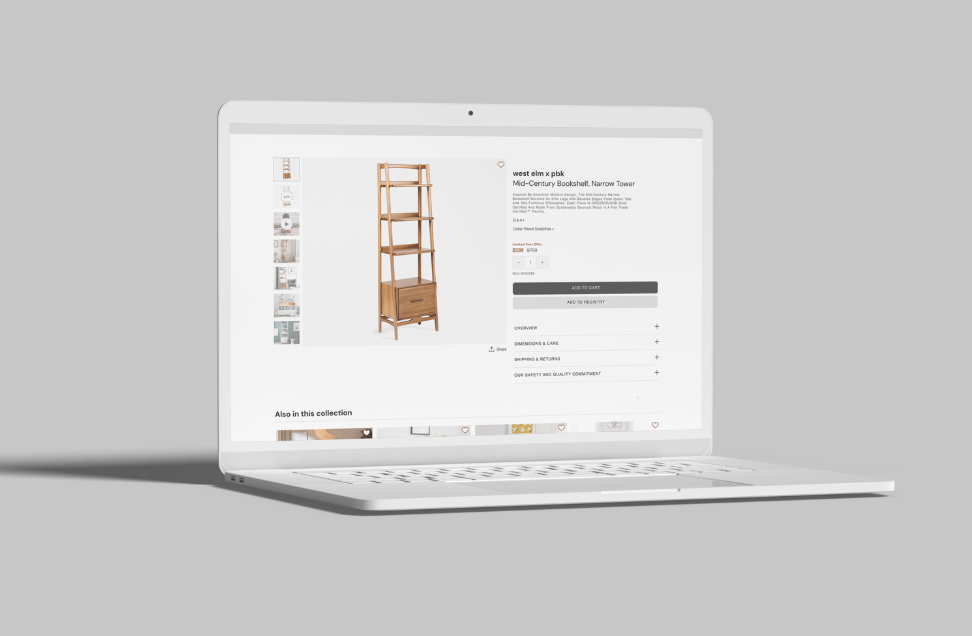
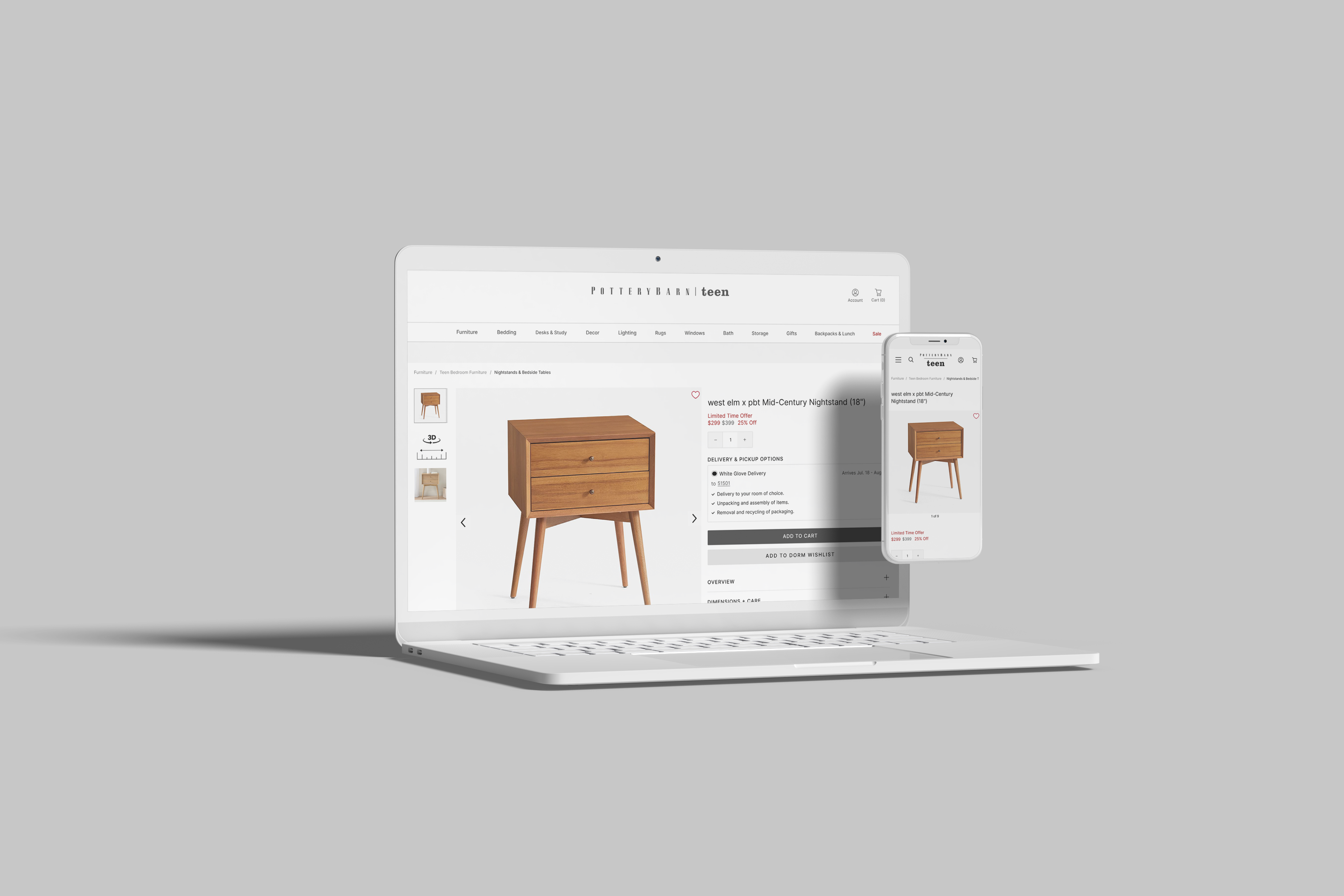
    I arrived at Williams-Sonoma midway through a PM-led product page redesign. The team was working in Balsamiq, rough wireframes, placeholder copy, interactions that had never been fully scoped and delivering annotated PDFs to development partners who were doing their best to interpret them.

  • The Challenge

    The brief was to modernize the product pages and better reflect the premium positioning of the brand.

    It was an aesthetic goal, not a performance goal.

    When the redesigned page launched, it lost. Convincingly. To a decade-old legacy page that had been quietly optimized over years through hundreds of small decisions.

A redesign that couldn't explain itself

That experience became one of the most formative experiences of my career.

It pushed me away from thinking about design primarily in terms of visual improvement and toward a different question:

What is this design trying to help the user do? The post-mortem was uncomfortable but necessary. We pulled the redesign apart and identified three failure modes that had nothing to do with the quality of the visual design — and everything to do with the absence of a clear hypothesis.

  • No performance baseline

    Without a clear metric to beat, there was no shared definition of success.

  • No measurable goal

    "Elevate the look and feel" is a direction, not a hypothesis. No specific user problem had been identified, making it difficult to evaluate whether the redesign was helping or hurting.

  • Big-bang thinking

    There’s a theory that people read in an F-shaped pattern, and that this should influeEvery change shipped at once. Navigation, hierarchy, content presentation, and interactions all changed together.

    When performance declined, there was no way to isolate which decisions contributed to the outcome

    nce how you structure content on your website.

The legacy page hadn't beaten us because it was inherently better designed.

It had beaten us because years of incremental optimization had made it frictionless in ways our redesign couldn't yet understand.

We had brought craft to a performance fight.

Rebuilding the practice around intent

I moved to the dedicated product page performance team and started over — this time with a different foundation. I migrated the team off Balsamiq and into Sketch, introduced mobile interaction specifications, and rebuilt the design documentation so dev partners were receiving something they could actually build from. The craft got sharper, but it was now in service of something: helping the team move faster and test more precisely.

The change in my own design thinking was more fundamental. I started asking a different set of questions before touching a component.

The framework

Funnel-stage-aware design

The insight that shaped every test

hypothesis was deceptively simple:

the design problem changes depending

on where a user is in the funnel. The craft has to change with it.

What is the user trying to do at this exact moment in the funnel?

What decision or action is this user trying to make, and what is getting in the way of it? Every design choice flows from that question. Typography, spacing, hierarchy, interaction each one either reduces friction toward that action or it doesn't. Taste is the mechanism, not the goal.

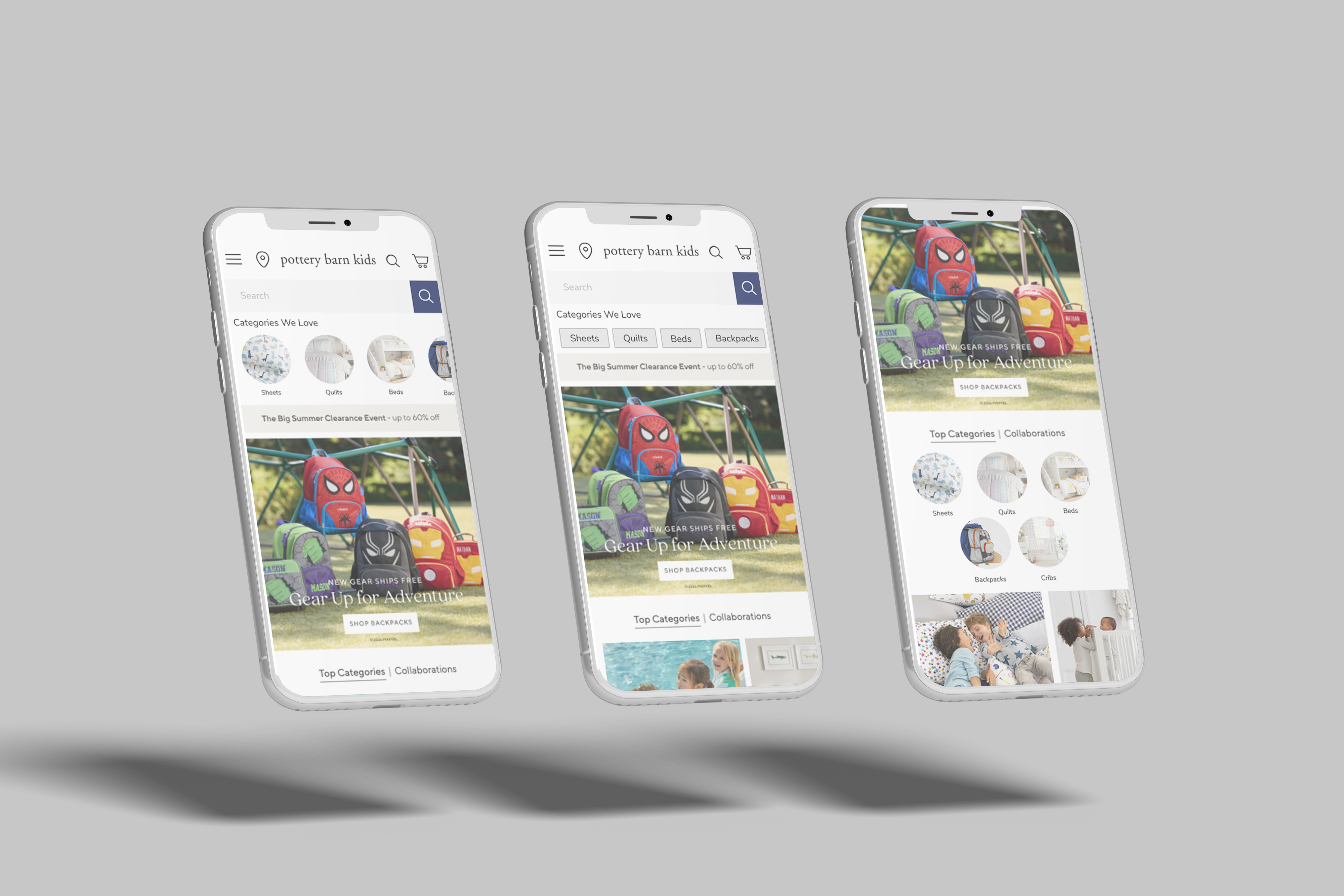
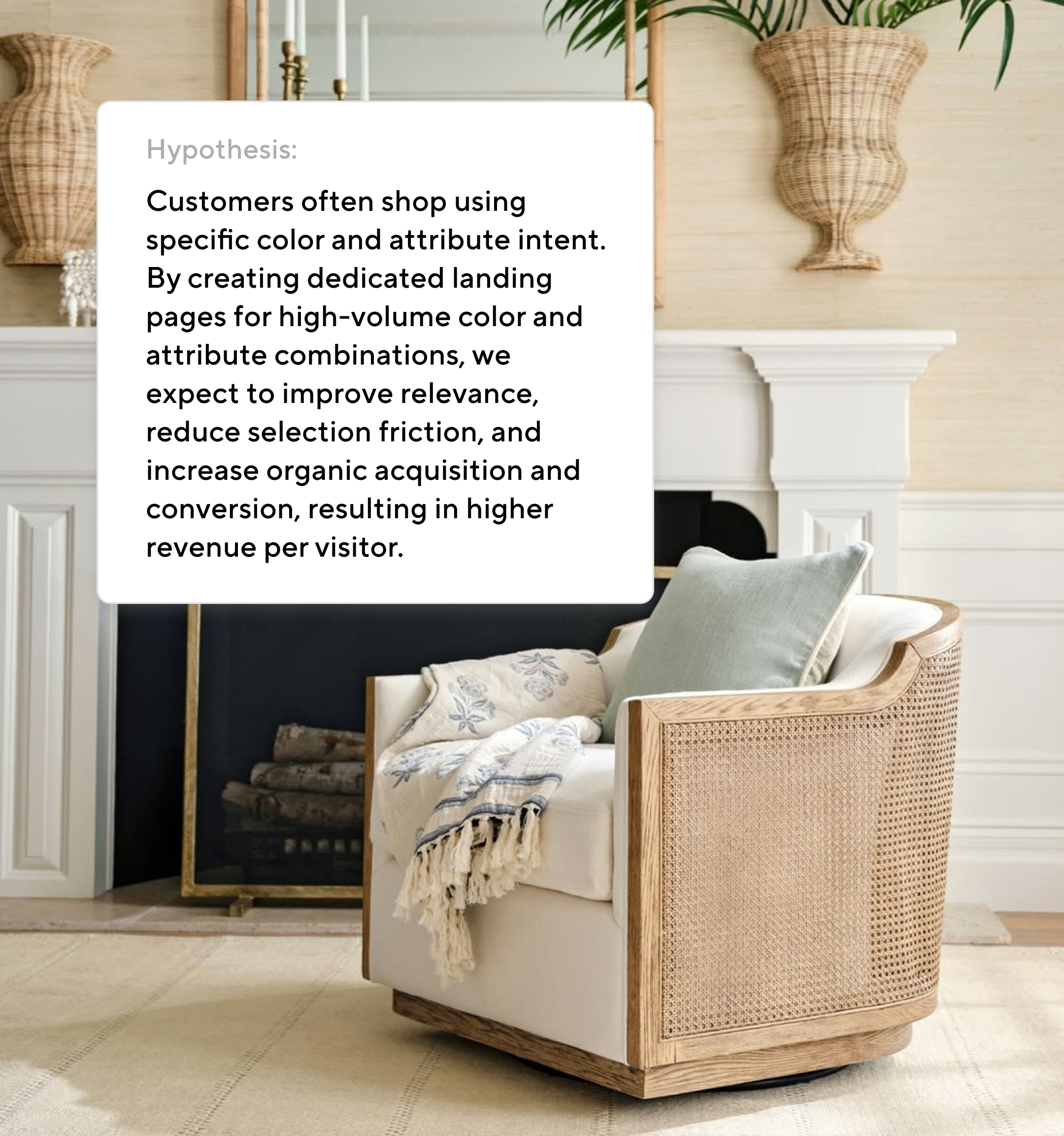
That question eventually got me pulled into a new initiative: a cross-functional A/B testing platform backed by the analytics team and a brand digital SVP. Pottery Barn Kids was chosen as the primary test bed. A strategically choice because it’s leadership, smaller footprint, and enough distance from the core portfolio to absorb risk. We could move fast and learn without consequence at scale.
  • Early funnel

    Wayfinding over persuasion

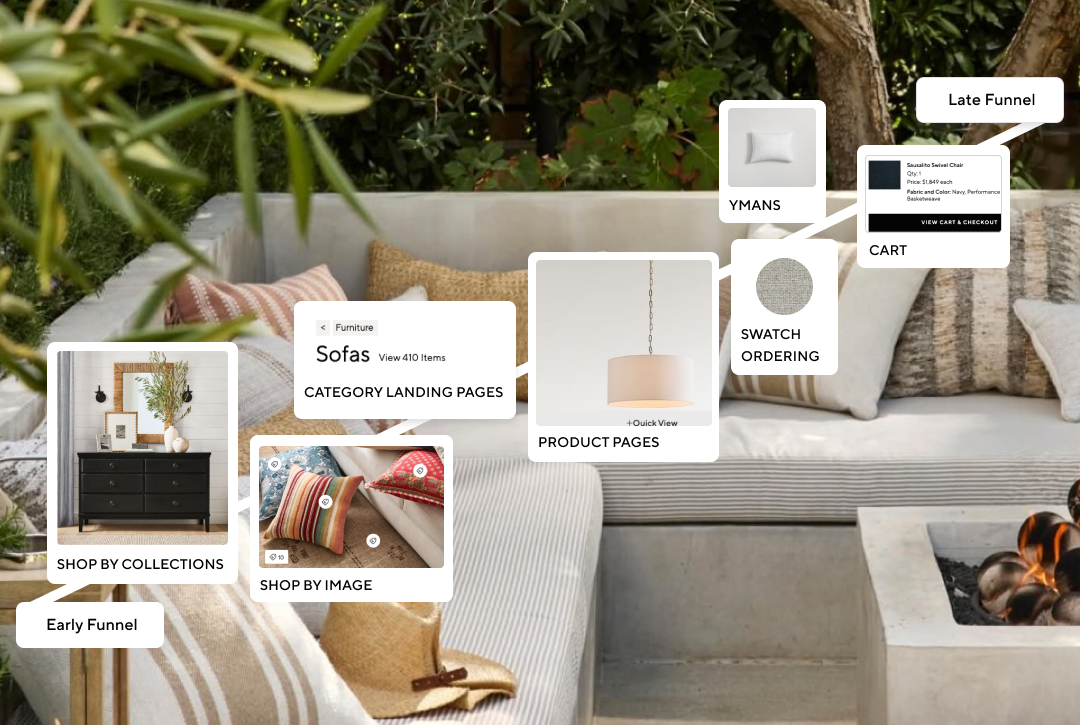
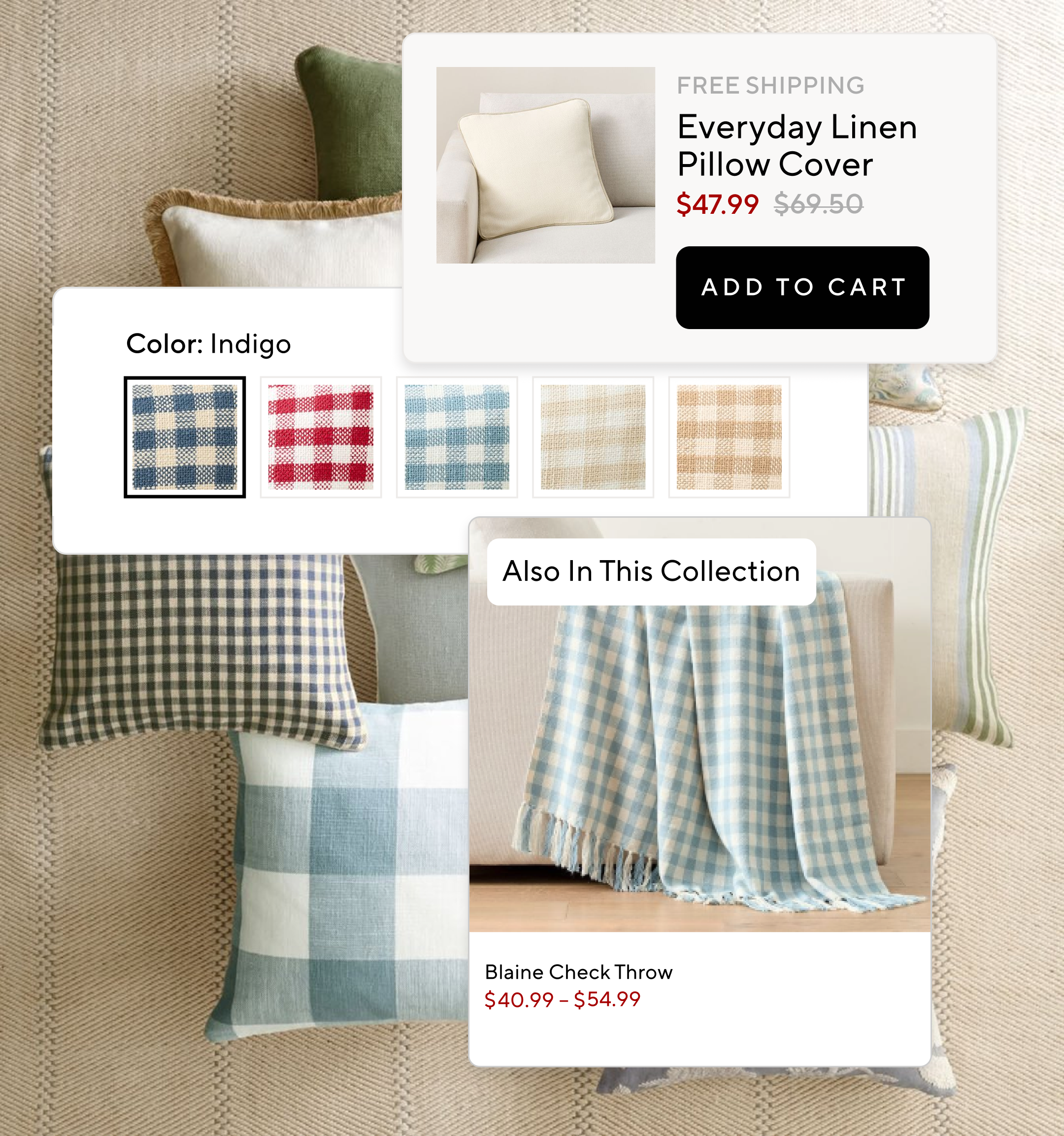
    A user exploring the assortment doesn't need to be convinced — they need to feel oriented. Navigation stripped to essential choices. Links to high-traffic category pages surfaced on the product page itself. Friction here is about confusion, not hesitation.

  • Late funnel

    Friction removal over information

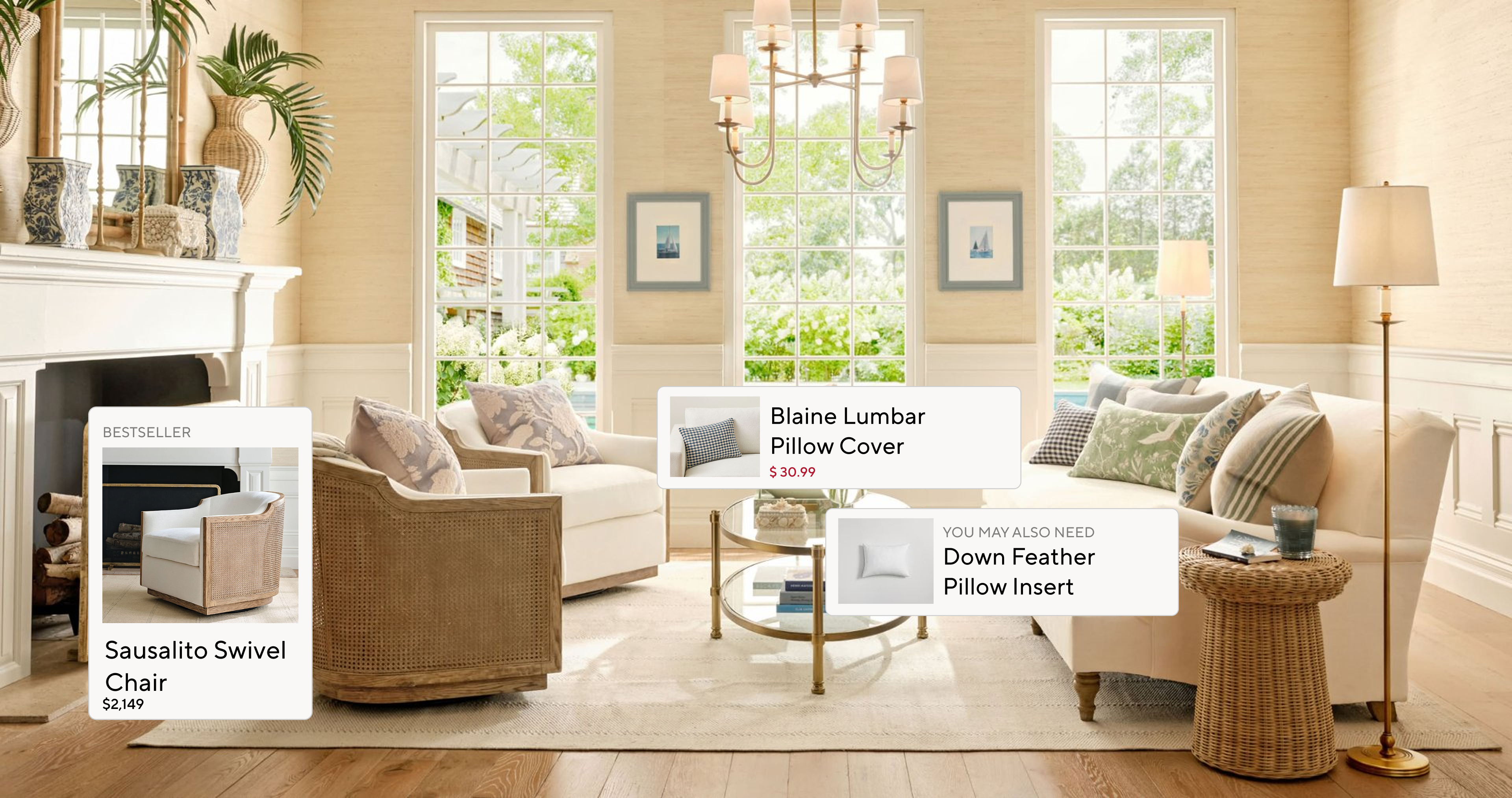
    A user close to purchasing has already decided. Every additional element on the page is a potential exit. The design question becomes: what can be removed? What is creating doubt that shouldn't exist?

Craft in practice

Working within the PBK design system changed the quality of the work significantly. Earlier product page work had been generic by necessity — Balsamiq doesn't have a brand. The design system gave me the vocabulary to be specific: the exact typographic weight that signals urgency without aggression, the spacing that creates breathing room without burying the CTA, the interaction pattern that feels native to the brand rather than borrowed from a template. Craft became precise because it had a language to be precise in.

Reflection

  • The failed redesign was more instructive than any successful one would have been. It forced a confrontation with a question most designers avoid: what is this for? Not aesthetically. functionally. Who is our user, what are they trying to do, and what does the design need to do for them?

  • The answer to that question is what craft serves. Typographic choices, spatial rhythm, interaction behavior. These aren't decoration applied after the thinking is done. They are the thinking, made visible. When craft and intent are inseparable, that's when the work performs.

ortegakristina@gmail.com

The Performance Power of Design Intent

Craft at the Service of IntentHow a complicated product page redesign taught me that beautiful design is only valuable when it knows what it's trying to do

A portrait of you.

RoleUX Designer

Company

Williams Sonoma, IncYear2017-2020

  • Overview

    I arrived at Williams-Sonoma midway through a PM-led product page redesign. The team was working in Balsamiq, rough wireframes, placeholder copy, interactions that had never been fully scoped and delivering annotated PDFs to development partners who were doing their best to interpret them.

  • The Challenge

    The brief was to modernize the product pages and better reflect the premium positioning of the brand.

    It was an aesthetic goal, not a performance goal.

    When the redesigned page launched, it lost. Convincingly. To a decade-old legacy page that had been quietly optimized over years through hundreds of small decisions.

A redesign that couldn't explain itself

That experience became one of the most formative experiences of my career.

It pushed me away from thinking about design primarily in terms of visual improvement and toward a different question:

What is this design trying to help the user do? The post-mortem was uncomfortable but necessary. We pulled the redesign apart and identified three failure modes that had nothing to do with the quality of the visual design — and everything to do with the absence of a clear hypothesis.

  • No performance baseline

    Without a clear metric to beat, there was no shared definition of success.

  • No measurable goal

    "Elevate the look and feel" is a direction, not a hypothesis. No specific user problem had been identified, making it difficult to evaluate whether the redesign was helping or hurting.

  • Big-bang thinking

    There’s a theory that people read in an F-shaped pattern, and that this should influeEvery change shipped at once. Navigation, hierarchy, content presentation, and interactions all changed together.

    When performance declined, there was no way to isolate which decisions contributed to the outcome

    nce how you structure content on your website.

The legacy page hadn't beaten us because it was inherently better designed.

It had beaten us because years of incremental optimization had made it frictionless in ways our redesign couldn't yet understand.

We had brought craft to a performance fight.

Rebuilding the practice around intent

I moved to the dedicated product page performance team and started over — this time with a different foundation. I migrated the team off Balsamiq and into Sketch, introduced mobile interaction specifications, and rebuilt the design documentation so dev partners were receiving something they could actually build from. The craft got sharper, but it was now in service of something: helping the team move faster and test more precisely.

The change in my own design thinking was more fundamental. I started asking a different set of questions before touching a component.

The framework

Funnel-stage-aware design

The insight that shaped every test hypothesis was deceptively simple:

the design problem changes depending on where a user is in the funnel. The craft has to change with it.

What is the user trying to do at this exact moment in the funnel?

What decision or action is this user trying to make, and what is getting in the way of it? Every design choice flows from that question. Typography, spacing, hierarchy, interaction each one either reduces friction toward that action or it doesn't. Taste is the mechanism, not the goal.

That question eventually got me pulled into a new initiative: a cross-functional A/B testing platform backed by the analytics team and a brand digital SVP. Pottery Barn Kids was chosen as the primary test bed. A strategically choice because it’s leadership, smaller footprint, and enough distance from the core portfolio to absorb risk. We could move fast and learn without consequence at scale.
  • Early funnel

    Wayfinding over persuasion

    A user exploring the assortment doesn't need to be convinced — they need to feel oriented. Navigation stripped to essential choices. Links to high-traffic category pages surfaced on the product page itself. Friction here is about confusion, not hesitation.

  • Late funnel

    Friction removal over information

    A user close to purchasing has already decided. Every additional element on the page is a potential exit. The design question becomes: what can be removed? What is creating doubt that shouldn't exist?

Craft in practice

Working within the PBK design system changed the quality of the work significantly. Earlier product page work had been generic by necessity — Balsamiq doesn't have a brand. The design system gave me the vocabulary to be specific: the exact typographic weight that signals urgency without aggression, the spacing that creates breathing room without burying the CTA, the interaction pattern that feels native to the brand rather than borrowed from a template. Craft became precise because it had a language to be precise in.

Reflection

  • The failed redesign was more instructive than any successful one would have been. It forced a confrontation with a question most designers avoid: what is this for? Not aesthetically. functionally. Who is our user, what are they trying to do, and what does the design need to do for them?

  • The answer to that question is what craft serves. Typographic choices, spatial rhythm, interaction behavior. These aren't decoration applied after the thinking is done. They are the thinking, made visible. When craft and intent are inseparable, that's when the work performs.

ortegakristina@gmail.com

The Performance Power of Design Intent

Craft at the Service of IntentHow a complicated product page redesign taught me that beautiful design is only valuable when it knows what it's trying to do

A portrait of you.

RoleUX Designer

Company

Williams Sonoma, IncYear2017-2020

  • Overview

    I arrived at Williams-Sonoma midway through a PM-led product page redesign. The team was working in Balsamiq, rough wireframes, placeholder copy, interactions that had never been fully scoped and delivering annotated PDFs to development partners who were doing their best to interpret them.

  • The Challenge

    The brief was to modernize the product pages and better reflect the premium positioning of the brand.

    It was an aesthetic goal, not a performance goal.

    When the redesigned page launched, it lost. Convincingly. To a decade-old legacy page that had been quietly optimized over years through hundreds of small decisions.

A redesign that couldn't explain itself

That experience became one of the most formative experiences of my career.

It pushed me away from thinking about design primarily in terms of visual improvement and toward a different question:

What is this design trying to help the user do? The post-mortem was uncomfortable but necessary. We pulled the redesign apart and identified three failure modes that had nothing to do with the quality of the visual design — and everything to do with the absence of a clear hypothesis.

  • No performance baseline

    Without a clear metric to beat, there was no shared definition of success.

  • No measurable goal

    "Elevate the look and feel" is a direction, not a hypothesis. No specific user problem had been identified, making it difficult to evaluate whether the redesign was helping or hurting.

  • Big-bang thinking

    A full template redesign meant every decision was bundled together. Nothing could be isolated, tested, or iterated. When it failed, we couldn't know why.

The legacy page hadn't beaten us because it was inherently better designed.

It had beaten us because years of incremental optimization had made it frictionless in ways our redesign couldn't yet understand.

We had brought craft to a performance fight.

Rebuilding the practice around intent

I moved to the dedicated product page performance team and started over — this time with a different foundation. I migrated the team off Balsamiq and into Sketch, introduced mobile interaction specifications, and rebuilt the design documentation so dev partners were receiving something they could actually build from. The craft got sharper, but it was now in service of something: helping the team move faster and test more precisely.

The change in my own design thinking was more fundamental. I started asking a different set of questions before touching a component.

The framework

Funnel-stage-aware design

The insight that shaped every test hypothesis was deceptively simple:

the design problem changes depending on where a user is in the funnel. The craft has to change with it.

What is the user trying to do at this exact moment in the funnel?

What decision or action is this user trying to make, and what is getting in the way of it? Every design choice flows from that question. Typography, spacing, hierarchy, interaction each one either reduces friction toward that action or it doesn't. Taste is the mechanism, not the goal.

That question eventually got me pulled into a new initiative: a cross-functional A/B testing platform backed by the analytics team and a brand digital SVP. Pottery Barn Kids was chosen as the primary test bed. A strategically choice because it’s leadership, smaller footprint, and enough distance from the core portfolio to absorb risk. We could move fast and learn without consequence at scale.
  • Early funnel

    Wayfinding over persuasion

    A user exploring the assortment doesn't need to be convinced — they need to feel oriented. Navigation stripped to essential choices. Links to high-traffic category pages surfaced on the product page itself. Friction here is about confusion, not hesitation.

  • Late funnel

    Friction removal over information

    A user close to purchasing has already decided. Every additional element on the page is a potential exit. The design question becomes: what can be removed? What is creating doubt that shouldn't exist?

Craft in practice

Working within the PBK design system changed the quality of the work significantly. Earlier product page work had been generic by necessity — Balsamiq doesn't have a brand. The design system gave me the vocabulary to be specific: the exact typographic weight that signals urgency without aggression, the spacing that creates breathing room without burying the CTA, the interaction pattern that feels native to the brand rather than borrowed from a template. Craft became precise because it had a language to be precise in.

Reflection

  • The failed redesign was more instructive than any successful one would have been. It forced a confrontation with a question most designers avoid: what is this for? Not aesthetically. functionally. Who is our user, what are they trying to do, and what does the design need to do for them?

  • The answer to that question is what craft serves. Typographic choices, spatial rhythm, interaction behavior. These aren't decoration applied after the thinking is done. They are the thinking, made visible. When craft and intent are inseparable, that's when the work performs.

ortegakristina@gmail.com

The Performance Power of Design Intent

Craft at the Service of IntentHow a complicated product page redesign taught me that beautiful design is only valuable when it knows what it's trying to do

A portrait of you.

RoleUX Designer

Company

Williams Sonoma, IncYear2017-2020

  • Overview

    I arrived at Williams-Sonoma midway through a PM-led product page redesign. The team was working in Balsamiq, rough wireframes, placeholder copy, interactions that had never been fully scoped and delivering annotated PDFs to development partners who were doing their best to interpret them.

  • The Challenge

    The brief was to modernize the product pages and better reflect the premium positioning of the brand. It was an aesthetic goal, not a performance goal.

    When the redesigned page launched, it lost. Convincingly. To a decade-old legacy page that had been quietly optimized over years through hundreds of small decisions.

A redesign that couldn't explain itself

That experience became one of the most formative experiences of my career.

It pushed me away from thinking about design primarily in terms of visual improvement and toward a different question:

What is this design trying to help the user do? The post-mortem was uncomfortable but necessary. We pulled the redesign apart and identified three failure modes that had nothing to do with the quality of the visual design — and everything to do with the absence of a clear hypothesis.

  • No performance baseline

    Without a clear metric to beat, there was no shared definition of success.

  • No measurable goal

    "Elevate the look and feel" is a direction, not a hypothesis. No specific user problem had been identified, making it difficult to evaluate whether the redesign was helping or hurting.

  • Big-bang thinking

    A full template redesign meant every decision was bundled together. Nothing could be isolated, tested, or iterated. When it failed, we couldn't know why.

The legacy page hadn't beaten us because it was inherently better designed.

It had beaten us because years of incremental optimization had made it frictionless in ways our redesign couldn't yet understand.

We had brought craft to a performance fight.

Rebuilding the practice around intent

I moved to the dedicated product page performance team and started over — this time with a different foundation. I migrated the team off Balsamiq and into Sketch, introduced mobile interaction specifications, and rebuilt the design documentation so dev partners were receiving something they could actually build from. The craft got sharper, but it was now in service of something: helping the team move faster and test more precisely.

The change in my own design thinking was more fundamental. I started asking a different set of questions before touching a component.

The framework

Funnel-stage-aware design

The insight that shaped every test hypothesis was deceptively simple:

the design problem changes depending on where a user is in the funnel. The craft has to change with it.

What is the user trying to do at this exact moment in the funnel?

What decision or action is this user trying to make, and what is getting in the way of it? Every design choice flows from that question. Typography, spacing, hierarchy, interaction each one either reduces friction toward that action or it doesn't. Taste is the mechanism, not the goal.

That question eventually got me pulled into a new initiative: a cross-functional A/B testing platform backed by the analytics team and a brand digital SVP. Pottery Barn Kids was chosen as the primary test bed. A strategically choice because it’s leadership, smaller footprint, and enough distance from the core portfolio to absorb risk. We could move fast and learn without consequence at scale.
  • Early funnel

    Wayfinding over persuasion

    A user exploring the assortment doesn't need to be convinced — they need to feel oriented. Navigation stripped to essential choices. Links to high-traffic category pages surfaced on the product page itself. Friction here is about confusion, not hesitation.

  • Late funnel

    Friction removal over information

    A user close to purchasing has already decided. Every additional element on the page is a potential exit. The design question becomes: what can be removed? What is creating doubt that shouldn't exist?

Craft in practice

Working within the PBK design system changed the quality of the work significantly. Earlier product page work had been generic by necessity — Balsamiq doesn't have a brand. The design system gave me the vocabulary to be specific: the exact typographic weight that signals urgency without aggression, the spacing that creates breathing room without burying the CTA, the interaction pattern that feels native to the brand rather than borrowed from a template. Craft became precise because it had a language to be precise in.

Reflection

  • The failed redesign was more instructive than any successful one would have been. It forced a confrontation with a question most designers avoid: what is this for? Not aesthetically. functionally. Who is our user, what are they trying to do, and what does the design need to do for them?

  • The answer to that question is what craft serves. Typographic choices, spatial rhythm, interaction behavior. These aren't decoration applied after the thinking is done. They are the thinking, made visible. When craft and intent are inseparable, that's when the work performs.